
The Space Between: Why Luxury Requires Transcreation
In the world of heritage-led brands, a literal translation is often a betrayal.
To translate is to swap words for their synonyms in another tongue. It is a mechanical act; functional, yet frequently hollow. But for a brand rooted in provenance, the goal isn't just to be understood, it is to be felt. This is where transcreation begins.
While translation stays on the surface of language, transcreation dives into the brand DNA. It asks: What is the emotional weight of this phrase in its home soil? And how do we rebuild that same weight in a new territory?
The Case for Cultural Resonance
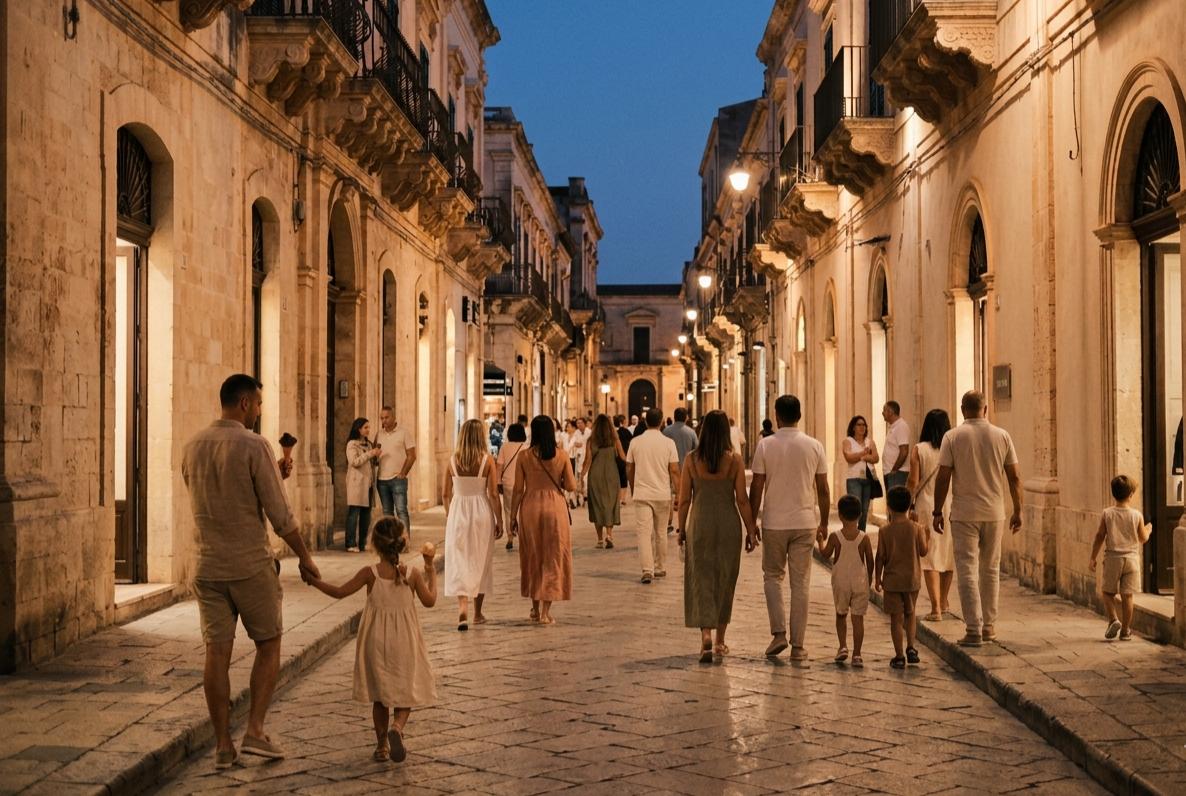
An Italian passeggiata is more than just a walk.
Consider the Italian word passeggiata. A standard translation might offer "a walk" or "a stroll”. Yet, to a transcreator, la passeggiata is a social ritual. It is the slow, deliberate movement through a piazza, along a main drag or seafront promenade towards dusk, and while not exclusively a summertime habit, it is far more bustling and convivial at that time of year. La passaggiata is visibility - a little bit of showing off time for some - but above all a way to build community. It is a quintessential rhythm of Mediterranean life.
If a luxury boutique or a heritage hotel uses that word, they aren't selling a "walk." They are selling the spirit of a place. To translate it literally is to strip the brand of its soul. To transcreate it is to find the equivalent emotional heartbeat in English - ensuring the very essence of your brand’s identity remains just as rich in London or New York as it does in the sultry streets and squares of Sicily at sundown.
While studying Italian and German at university, I was not keen on translation; mainly because I exercised the art of transcreation. The academy was purest and demanded utmost precision so I fell foul of the marking gods. I was keener on having a more creative license to interpret. Little did I know then, that my approach would have its zenith in the world of branding, and be given a name - ‘transcreation’.
So, passeggiata in English, depending on the editorial or literary context, could be transcreated as “a ritual evening stroll’, ‘a slow, social walk with friends (or family) through the heart of town’, or ‘the art of being seen and noticed’, or a ‘lazy summer stroll after dinner’. One Italian word requires a few more in English to get the same sense across.
The Methodology of the Brand Translator
My approach to transcreation is built on three pillars:
Contextual Auditing: understanding the "soil" where the brand was born (those hidden meanings of one language vs the other).
Linguistic Architecture: rebuilding the vocabulary to suit the new market’s nuances.
Sensory Alignment: ensuring the tone, pace, and texture of the prose remains consistent across borders.
Translation tells your audience what you sell. Transcreation tells them who you are. It is the difference between being heard and being truly recognised. By focusing on the the transcreation narrative, I ensure your brand doesn't just cross borders, but also generates a yearning in others to join you and take part in your life.